

Ep. 16: Campaigns, Strategy and Winning Work with Emily Binning from WSP
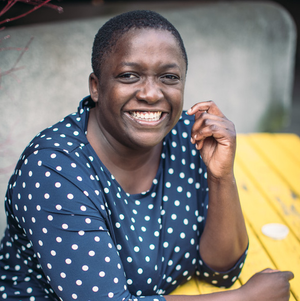
Today's guest is Emily Binning who is the UK Head of Brand and Marketing at global engineering powerhouse WSP. I know Emily from when we both worked at Arup and this interview was a lovely way to reconnect.
Key takeaways
How strategy should be simple and, on a page
How to push back on BAU (Business As Usual) activity so that you can focus on the things that are strategically important to the business
Building a high performing marketing team and create the right environment for them to flourish
The importance of having a good martech stack (marketing technology) - it's been a lifeline during lockdown for her marketing team
Rate and review us
Please don’t forget to rate and review us if you’re listening on Apple podcasts as it’s lovely to hear what you think plus it helps us to spread the word.
Resources
WSP UK site
WSP Hour / Changemakers Campaign
ALDI Twitter campaign
Abbas Marketing
Recorded on Monday 25 January 2021.




Transcript
Ayo Abbas 00:05
Hello, and welcome to the latest episode of Marketing In Times of Crisis. And I'm your host Ayo Abbas, a marketing consultant who specialises in working with companies in the built environment that's basically architects, engineers and contractors to you and me. today. It's Monday the 25th January 2021 and we are in lockdown part three. My guest today is Emily Binning from engineering powerhouse WSP. I've known Emily for years from when we both work to Arup. And it was really lovely to reconnect and do this interview of her. In this session, we touch on lots including the importance of strategic marketing, and its alignment with winning work, having the courage to push back on business as usual. And why it's really important to empower your teams and let them do what they do best. We also look at marketing technology, and how that can help us all do our jobs. So if you're a regular listener, please do me a favour and leave us a lovely review. It really is appreciated and helps us to spread the word. Anyway, let's get on with the show. And I'll stop talking. So off you go and enjoy the interview with Emily.
Ayo Abbas 01:10
Hi, welcome to the latest episode of marketing in times of crisis. Hi, Emily. Thanks so much. And thanks for coming onto the show. Can you give me a brief intro to you and your role at WSP, please?
Emily Binning 01:21
Yeah, hi, Ayo, it's brilliant to be with you today. And thanks for inviting me on the podcast. So I have about 23 years experience now, gosh, in marketing and comms which is terrifying in itself. And I, the majority of my career has actually been in professional services. So I'm really kind of rooted in that. I joined WSP three years ago. And at that time, I had a very, very clear mandate. And it was simply to show us a better way to do strategic marketing. And so in that time, I kind of refocused the function and took it apart and rebuilt it, essentially. And we now have a strategic marketing function in place that helps the company win work, it's really that simple. And profiles and position us to when work and be front of mind with our clients and potential clients. So my role, specifically, gosh, I mean, you know, I'm sure many people you speak to could talk at length. But I'd say in summary, ultimately, I'm responsible for making sure that the marketing strategy aligns to the business growth strategy, going back to that point about winning work. I think it's vital that I recruit and retain the best people, because I could have the best strategy in the world. But if I haven't got the best team working alongside me, it's gonna be really tricky. And so in doing that, I really sort of try and create and foster that learning environment. It's a great environment where there are no blockers, we get to innovate, we get to try things, we get to fail safely. All of that great stuff. I'm also and I encourage my team today. And it sounds really easy. But it's not we're the connectors, we join the dots across what is a very diverse matrix type of business, hundreds of service lines, hundreds of clients. And so joining those dots that that we're getting the best value we can for WSP is really important. And that could be within a piece of marketing activity. But often that could be around a growth opportunity or something that's business strategy, where we were part of the conversation, but we can bring others in to make that much more rounded proposition.
Ayo Abbas 03:38
So how big are WSP? In the UK now and your team? And how big is your team as well?
Emily Binning 03:43
So in the UK, we are 7000 people. Yeah, globally. Gosh I mean, we're always growing. We're always growing. We're headquartered in Canada through a Canadian company and we're on the Canadian Stock Exchange, we have grown aggressively through M&A. So to put it into context, when I joined three years ago, the day I joined, we were at 32,000 overnight, we literally overnight, we announced we were going to acquire Opus, and that kind of put on I think it's like another 8000 on top or something it was huge. And yeah, we continue to grow. We've recently just acquired Golder, which will kind of put us out there on the kind of top end environmental consultancy stage. And then I also look after Africa and Israel as well as part of my remit and link in globally. The team so we cover as a function. We have the strategic marketing piece also have internal comms, public affairs, media relations, and the digital marketing piece falls within, of course, the marketing team. We also cover as you'd expect reputation, crisis management and graphic design. So there are about 18/19 of us. Yeah. So, you know, we, we keep it lean. We're very,
Ayo Abbas 05:03
I was gonna say it's not a massive team for that company.
Emily Binning 05:09
It's a very lean team. But I think, if I'm honest with you, I Oh, I think that's one of our gifts. Because we have to be incredibly pointed about what we do. And the value we add, and one of my key drivers and changes at the beginning of the creation of the team was around we're not going to be in that business as usual layer. And that switch from reactive to proactive, and they're very easy statements to make. But we've done it, we've 100% done that.
Ayo Abbas 05:47
So what sort of things did you have to say no to?
Emily Binning 05:50
Oh, gosh,
Ayo Abbas 05:51
I mean, you know, it's an important question.
Emily Binning 05:57
It's a really important question. And because when I, I kind of took it apart and rebuilt it, I made a conscious decision that I had to live and breathe that business and what that function was to become, because in order to do that, I needed to know what was required of the business, the personalities, the growth ambitions, and build it. So I created the right environment to attract the best people to come and help me, and to also get it to a point where the environment was right for those really capable, brilliant people to do a fantastic job. And ifthey had come in too early, they would have been asked for green brochures that he would have been asked for all the basic marketing things, and I had to go through that process of really pushing back on the business in the right way, and educating them to this new and different way. And so, you know, it was in the early days, and I make it sound so basic, some of the things, we look at awards, and I'm sure you and I could debate that at length, the value of awards, you know, certainly in the engineering industry. There was a lot of awards. And some of them, there was no strategic plan. And it was saying no to a lot of those it was it was discussing how that model could be the model of central awards versus in the business, to free us up to be working on a major strategic bid worth hundreds of millions of pounds and as doing the profiling and positioning for that. And then when you're saying no to that business, as usual layer in the right way, and you're putting your efforts in that strategic piece, and then the business can feel and see the benefit of the activity, it starts to kind of build up and the pace and the momentum, and people want more of it. But it wasn't easy. I'm very fortunate that WSP, genuinely, it's an environment where you're trusted for your skill set. And there are no blockers. And it's not the bureaucracy of writing a paper and it has to go and get signed off and all that stuff. You know, we're trusted for our skills, but we're also accountable. Big time, you know.
Ayo Abbas 08:15
And there was a phase. Like, I can't remember when it was probably about five years ago when you guys used to like advertise in like, train stations. Do you still do that?
Emily Binning 08:26
Yeah. So
Speaker 1 08:29
WSP is really interesting from a corporate brand perspective. Like, you point out many, many years ago, corporate brand campaigns and advertising was what WSP did, and it has a really playful personality. And that, you know, would be taking out adverts in the Times. Yeah, that's what they did. And, and so there is a nice history and track record of that. And we still do that, this year. And last year, obviously, behaviours have changed. But we're still doing we invest a lot in our corporate brand activity. And when I say a lot, I'm not just saying money out the door, attention, you know, resource as in the minds of the team, making sure it is implemented across everything we do and is like that significant factor in what we do. But yeah, we really try and push the boundaries actually, for professional services and b2b in terms of our brand, our corporate brand.
Ayo Abbas 09:34
Yeah, coz it used to be key, the key kind of terminal kind of stations. I remember seeing them at some point, you know, now, because there's not many, there's not many engineering firms that actually do that in that kind of thing. So, it did always stand out to me. So onto my next question, so in terms of kind of locked down part three, I mean, what approach have you been taking in terms of how you've been doing your marketing over the various lockdowns?
Emily Binning 09:58
Yeah, so it's well, last March, when it all kicked off. We very, very quickly, I mean, within two weeks had realigned our marketing focus. So we have a very disciplined rigorous marketing planning cycle every autumn. When we work with business, we reflect on the business growth strategy, and we kind of create our plans for the year. And there's like an overlaid marketing strategy on top of that. So, we very quickly had to refocus, look at the opportunities and priorities for the business, our clients in the market at that time, working with the business working with our strategic growth team, and there was a bit of a two pronged approach on that. So there's that classic present forward, what's in front of the nose? What do we really need to chase now? What were the client's pinch points? Where are the projects that need some more attention? All marketers? And then there was that kind of still. And it's really important, because I think in times like this people and organisations forget this, that that kind of forward back approach, still looking ahead of that 6,12,18 months, because you know, great opportunities can come out of this for business, I think, if they still keep that lens on the future. I think it's a really important point. So we've been trying to balance that we, as a team have focused much more on the quality, not quantity, again, easy statement. But let's just do it really, really well. Let's make sure our targeting is bang on. In terms of we are we reaching the buyers? are we reaching their circle of trust and influence? We have worked very closely with our strategic growth team, because I feel in times like this more than ever, we have to be supporting our key account managers and the seller doers, helping them to have the conversation starters how, you know, back in March, it was like pick up the phone and speak to your client. Think it's important not to forget the importance of internal comms, it's been a big thing for us, because we're a people business, our only asset is our brilliant people. And we had to get our confidence and guidance, how we were going to navigate this and keep close to our clients. That was a big, big piece for us. And then we zoned in I know, it's predictable on our digital marketing plan and our content pipeline to make sure that was robust. Everybody was feeding into it. We, you know, I talked about targeting a moment ago, but that's fundamental to what we do, and trying to find sort of those new and creative ways to do that. And
Ayo Abbas 12:54
how is your data? Because I know that if you're going to start targeting and being more specific, which is what this kind of pandemic has thrown up? I mean, did you have the data in place for that?
Emily Binning 13:04
Yeah, so So for us, it's really a case of be it. A strategic pursuit, or an account based marketing piece, we're just really close to the Strategic Growth team, those key account managers in the business. And we have our capture planning teams. So, they're brilliant at doing that capture planning piece at the early part of the bid. And that's when we start to map out who we know. And then we'll do our piece of well actually did they know us? What are they reading, what are they watching? Are they following us
Emily Binning 13:41
Stalking and tracking. And so we just had to really, really zone in on that. And we always have but even more that critical eye on that has been super important. And I think I think this is where my soapbox, but I think one of my big learnings throughout this whole whole journey so far has been around. I don't want and I fear everybody potentially is sort of navigating into this space. I don't want social media, particularly LinkedIn to be that default complacent option. A bit like to remember in the old days where you do a nice flyer, and you put a code on the back. You put it in an envelope, and you'd see what happened. No show by age, but you know, that's what we do it and we go, okay, job done. Let's just see how many we get back. And I fear that LinkedIn in particular, is starting to become like that. And the reason why I raised that is we recently had a very important strategic bid. We were doing our profiling and positioning campaign and the team were doing a great job and it was just wrestling with me. Are we reaching the buyers are we reaching them? And actually, when we really dug through the the kind of the buyers and the personas, many of them weren't actually on LinkedIn, or they weren't following us or that, and we had to stop and go, how else can we reach this? How else do we reach them, and we've got to find a way. And it just, it just got me thinking, I don't want us to be in that space where we become complacent with it as a channel.
Ayo Abbas 15:29
But what I kind of think is also you don't own you don't own that data. And like you say, you don't know if somebody is actually going onto LinkedIn, they might not be all linked to you. I think you only see 10% of your contacts, information and feed and information. So it's easy to miss. If you don't think to us, you don't even know if you're even in their stream of information. So in some ways, that's why I was asking you the data question, because I was kind of like, if you have their emails, for example, you had ways of connecting with them outside social, where you're more likely, you know, it's been received, you know, you can have a Read Receipt, you can that kind of stuff. And that's that's the cold data piece, isn't it? In terms of at least you know, you're hitting someone or, you know, you're actually making that contact? And I think social media is a, it's a bit of a pay and spray in a way isn't
Emily Binning 16:15
it is? Yeah, gosh, that that phrase, you know, I do remember that from the old school marketing days. So it is and I think it's so so in the strategic marketing piece, because that's what we're specifically talking about today, just at the function, we focus on three things. And they are the profiling and positioning for key strategic pursuits. And we were really close to those bid teams to understand the win themes understand who's the influences are? What they're buying, what's keeping them awake at night, all that great stuff. And then we will profile and position to help influence, then there's the account based marketing. So that's when we really dig down into key accounts work with a key client managers, and we have bespoke marketing programmes. So those key accounts, and then you have like the one WSP themes, and they're sort of the contextual cross cutting themes. So delivering Net zero is a really, really good example. Yeah. And I think that's where just going back to the digital marketing piece, and specifically social media and LinkedIn, you know, from a one WSP themes that profiling that contextual piece, I think it can be really powerful. And it's more so powerful when your people employees are sharing that content, you know, when we're getting to 30%, sometimes of our traffic to our campaign pages come from our people sharing our content. And that number is on the increase. I mean, it's phenomenal. So we have our LinkedIn A teams. We use smarp, which is an employee advocacy platform, it is so powerful, because they're the ones that have the connections, compellingly authentic coming from them.
Ayo Abbas 18:03
Yeah. And then sharing it because they want to share it right.
Emily Binning 18:06
Yeah, exactly. So it's a really interesting, interesting space, I think to debate.
Ayo Abbas 18:14
So what do you think? I guess, I guess, let's move on to campaigns in terms of you talked about the kind of one themes and those kind of cross sector things that are global for you. I know, one of the campaigns you've recently launched is the WSP Changemakers Campaign. How does that work? And what how did that one come about?
Emily Binning 18:31
Yeah, so the Changemakers Campaign, honestly, Ayo has been a complete joy to work on. It's one of those that completely aligned to sort of my my purpose, and why I love what I do. And you and I know, like, it's been proven that brands that continue to invest in their brand, during times of turmoil and crisis come out stronger. And we really believe in that we really believe in it. So what we did last September well it was August, we had a bit of a brainwave, within the team of a kind of loose concept. And traditionally, in the autumn, we do a bit of an ad campaign sort of push. So the timing was right. And the campaign basically celebrates each and every one of the 7000 people in the UK. And importantly, it's not just our incredible technical staff. It's everyone, including our management services teams too. And so, we felt that during this pandemic, more than ever, we needed to create that sort of renewed sense of community and spirit and an appreciation for what we do in the power of that and it wasn't as important internally for a cultural piece as it was externally to the market. 100% and we centre the campaign around the WSP hour. And that essentially is telling stories about the combined time of 7000 people and what we can achieve in an hour for our clients on our projects, and quite frankly, for society, because that's part of our purpose and what we're about. And it's just been a joy to work on, we had the kind of hero video, we're now doing our change maker profiles of people in our business, and we've got big plans for this year. You know, I think you'll agree, challenge me if you don't, but people content wins every time we see it in our stats. And so we're telling our stories through our people. And that is the key ingredient. And we have great people, and they do amazing things. And it's just a joy to work on. And like I said, we've got some great ideas, we've also really challenged ourselves and to experiment, the digital marketing space. So you know, paid for activity on Twitter, which we haven't really done before. And that's been great and
Ayo Abbas 20:58
Twitter is relatively cost effective as well.
Emily Binning 21:00
It was very cost effective. And lots of
Emily Binning 21:04
Google AdWords display ads we have done, as you pointed out earlier, we're used to a lot of print ads. But what we've done this year is worked with Reach media, and doing regional ads. Lots of exciting things. And we've even trialled targeting our employees through LinkedIn, so they receive specific content to them. So we've tweaked the wording of the ads, for example, you and your colleagues and things like that. So it's really targeted to our 7000 people. And yeah, it as a concept. It's really powerful, because you can overlay it on so many things. For example, imagine the Ws p our and changemakers. Talking about volunteering days and CSR. It it really counts across everything.
Ayo Abbas 21:57
campaign, you can go actually we can apply in this way.
22:00
Yeah.
Ayo Abbas 22:01
I've got a question for you, actually. So you targeted your own employees on LinkedIn, which is an external channel? How can we didn't do it via your intranet? I'm assuming you have one?
Emily Binning 22:09
Yeah, it was we've done it on the intranet. We have, obviously, the one that the Wire is our weekly kind of gathering of all news. We have a great Yammer site for it, all sorts of stuff like that. But we just wanted to try this on LinkedIn. Because I said to you earlier, you know, generally, our people are quite active on LinkedIn. They're our biggest advocates, they share the content. And I don't know about you, but sometimes I have an evening. I'm sad. Yeah, my LinkedIn app. And we just wanted to give it a go and actually, with, obviously, looking at the data, but it has been really powerful for us to drive people. And what happens is they click on it, and then it drives them to our Yammer site. Ah, okay, yes. And then to our SharePoint site, so they can see lots more information. We've done various activities internally, as well. And we have these clever ads where they're split screen, and it'll be an hour. And that might be your commute to work, pre-pandemic, and not now and the WSP hour, and that's designing the network to get you there. And a really beautiful strong photography. And we actually, again, our playful personality. We did one around the Bake Off, and how actually the hydrogen piece and how we're fueling ovens, but we had the showstopper cake. So we did some clever sort of an hour and our hour so yeah, so fun, really good fun to work on.
Ayo Abbas 23:41
That is brilliant. And I love the LinkedIn idea of targeting your own people I hadn't thought of that. But actually it makes sense is another way to actually drive traffic to your own internal channels, because actually a lot of people kind of bypass and during them during day, don't they kind of will just generally, or is that just me?
Emily Binning 24:01
It's not just you Ayo, I can assure you.
Ayo Abbas 24:05
That's all I gotta say on to my next question, which is around I guess lots of people are, I guess, having to embrace marketing, including digital marketing much more now, and in a different way. I mean, are there any kind of tips you want to give to people in terms of those starting out? And they might be small businesses as well?
Emily Binning 24:25
Yeah, there's a few tips actually. And by no means am I saying these are easy, but that I'd say steps that you shouldn't skip more than ever, I think, have a very clear purpose. Just spend that time Think about your purpose and what your proposition is. Yeah, I think it's come through front and centre and our conversation so far know your audience. Know your audiene and know their customer or end user personas, customer journeys. I really think you have to put the time in on that. I think be consistent with the look and feel and tone and what your brand personality is. But on that point, I really liked your recent share about your own brand. And how, you know, it's almost just rolling as you go a little bit. And I think that's a really interesting point, because some of this happens as you go. But I do think if you've got a clear purpose from the outset, you'll be okay. And yeah,
Ayo Abbas 25:32
I think that's so important as well, because, yeah, cuz I mean, my own branding story is I haven't actually got a logo. Yeah, I've got a website, I've got colours. But I actually don't I haven't done the kind of pure kind of logo or visual identity piece. And one of the reasons I haven't done it, I guess it's because I'm still finding my way. So I set up my business year ago. And I think it's been more about learning about my business and what people want from it, and what I want from my business and my purpose, my role. So it's been a lot more on that rather than, you know, and now actually, I feel more in a position where I know what that is. For now. I'm taking that and turning that into my marketing kind of branding brief as it were. Because I just kind of think it's it makes more sense.
Emily Binning 26:12
Yeah, it does make more sense in that instance. Absolutely. And, and you'll believe in it, it will be authentic to you. And I think that that from the beginning, I'm sure you have that purpose in my Why do I want to do this? And Who is it for? And where's that gap in the market? I'm not finding this content. So hey, I could create this content. And so I think that's your guiding principle, isn't it?
Ayo Abbas 26:36
Yeah, it's I know, it's finding the right tone of voice for me as well, you know, what do I really care about? And it's like, there are certain things where I do get on a soapbox like you do. And I think that that is that is it? And you know, so it's like, these are the areas that that really resonate with me. But yeah, so that's kind of my journey.
Emily Binning 26:56
I think keep an eye on the competitors, but don't get distracted by them. I really believe in that. And I'd say, when you're looking at strategy, at the beginning, keep it simple. So I challenged the team every year, we have a marketing strategy on a page. And the elements of that includes that as a statement of marketing strategies, that's the top line, we would have a little description of the key market issues, we then have some bullets of what our marketing initiatives are, we then also explore like the critical underlying beliefs and assumptions, yes, and sentences which start with we must, we should we know, and then have some goals and metrics. And then also, you'd also have the state of marketing sort of in 2019, and then what you want it to be in 2020. And that's all on a page. And just keep it really simple. And sometimes I think people think of strategy. And as Oh, my goodness, this is reams of reads. And it doesn't have to be, it really doesn't. And then I think the other tip would be underpin what you're doing with the tools to help you achieve the goals. And in 2019, we took a lot of time, and did our due diligence around Martech stack. And I went to ExCom and with a proposal file. And sorry, ExCom is our kind of top leadership board. And I went in with a proposal for our martech stack and the level of investment. And fortunately, they believed in me and the function. And it's been transformative for us. And I really, you know, if we hadn't have had that Martech stack when this pandemic kicked off, it would have really made it very difficult for us to generate the content and what we what we've achieved during that time.
Ayo Abbas 28:47
Can you explain what a martech stack is?
Emily Binning 28:47
Yeah, sure. So it's marketing, marketing technology stack. Essentially, it's what tools do you need to help do you create the marketing outputs you need as a function, but also these tools, they kind of link in together? And it's about the data output you'll get? Will it save time? Will it save money. And what you do is there's so many technologies out there. So by way of example, there's a product we were using called lumen five. It's a really clever little video platform where you can create short videos for social but anybody in the team can use that really quickly. Yeah, and create these short videos. And that has been brilliant. And actually initially we thought of that as an external tool, but we use that as much internally as we have externally. Then you might have, say Sprout Social would be part of your stack. So that's obviously our social media tool, where you can obviously monitor your social channels, upload your social posts, and all that great stuff. Then there's there's pieces of kit like Turtl. And that's a really interesting kit, the digital publications. So what it is, it's all those bits of technology, and they form your technology stack. They have to serve a purpose and objectives. And what you do with that stack is you constantly refine and evolve every year based on what's working, what isn't. Are you getting the right data out of it? Are you getting the efficiency gains? And? Yeah, it's been a game changer for us.
Ayo Abbas 30:30
Did you put that togetehr with your IT team as well, was that,
Emily Binning 30:33
yeah, so they were great at just helping us, I guess, go through the different contracts and your will our systems talk to their systems,
Ayo Abbas 30:43
integrations, massive
Emily Binning 30:45
operation? Exactly.
Emily Binning 30:48
Actually, it was very much driven by us. And then, of course, our procurement team. So making sure we have the right contracts and agreements in place and negotiating. And actually, for us, we're really moving in this year, hopefully. So the automation piece on our website, our website is globally owned, that we're really pushing that side of things. So yeah, underpin, I suppose the tip is just make sure you look at the tools you need that might initially look like it got a bit of an outlay. But my goodness, in terms of time, agility, resource efficiency. It's worth serious consideration, I'd say.
Ayo Abbas 31:27
But I knew I think that's absolutely right. But when it comes to market calls, as well, there's also this thing where actually, there's a lot of kind of subscription, relatively low price things now on the market, like, you know, VEED, for example, for video editing like that you can get, which you know, don't cost that much each month for smaller businesses as well. And you can kind of do similar things, I think it's just always keeping an eye out, I think on that kind of area. There's
Emily Binning 31:55
always new technologies coming out me, gosh, look at us just now on this podcast. And it's just, it's been remarkable, and it's ever changing. So a big request for me for the team, and I bang on about it quite a lot. We have to be up there with the trends that are coming, we have to understand them. There'll be some where we decide to let it just walk on buy us we think this is going to be a fad or it's not for us. And there'll be some we're like no that this we need to zone in on and we have to be on our toes the whole time with this. We have to be.
Ayo Abbas 32:27
Anyway, I think the other thing that in terms of tips, I know we were talking earlier, one of the things that I kind of am on my soapbox, or this week is very much about context and relevancy. So for me, it's around, I guess, people giving people advice, but actually making sure it's relevant to that industry. And that target audience is the right thing to actually be saying because I kind of, I'm starting to feel that there's a lot of kind of one size fits all advice going on at the moment. So yeah, I'm seeing that a lot in Facebook groups and business groups and things like that. So that is my
Emily Binning 32:57
Yeah, and it's a faceless. You know, anybody can do I could be Julian, I'm a pilot if I wanted to you wouldn't want me flying a plane. it's a different world now
Ayo Abbas 33:17
it iis context and relevancy. That's one of mine. Okay, so in terms of what's coming up, are there any particular things you've got coming up as a business or alrge come on large campaigns for the next kind of quarter or so?
Emily Binning 33:30
Sure. So I think, you know, we will have a clear focus that aligns to the growth opportunities. Full stop. Yeah, we're upscaling our account based marketing programme, because that's something I introduced, and it's really starting to embed now we can see the value in that. And I just mentioned about the automation. So there's more we can be doing around that. I think I have recently been appointed to the strategic leadership team for the UK. And that's an opportunity to further cement marketing at that table at that level, where we're talking about growth opportunities, and actually having set the strategy for the UK. And I think that's a brilliant opportunity for the team. huge opportunity. I think that future back approach and that, that present forward getting that right balance that we're spending the right amount of time on those two things. Yeah. And from a themes perspective, delivering Net Zero, huge for us and COP happening in November. We've got some really exciting plans for that and our Changemakers campaign, great ideas coming forward from the team and our agencies so that I just think we can run and run with but we've got to keep it fresh. Got to keep it fresh. So that's one of my soapboxes at the moment? And you know what I think that thought leadership piece. And I kind of cringe a little bit when I say thought leadership, but we'll call it is the right word. But I just want to continue around that way and look at thought leadership is this, it's the best in class insight. How can we creatively tell those stories? And we must get this to the right audience? And what are the outcomes of that, I think there are three outcomes that we should be measured on. And that is, maintaining and creating new relationships for the business, revenue, and reputation. And for me, that is critical this year. And those outcomes are important. And so that's a real focus. And then I suppose the other key message I've been given to the team is around, I really want this year to see 1% improvements here, there and everywhere. And that compound effect of that if you read the James clear book about habits, and he talks about the compound impact of 1% improvements, and it's just, it's just out there, but then the balance of that with those wow moments. And every year, we have our wow moments as a function. And, you know, we need those aha moments this year. But we also have this great opportunity for those real short, sharp improvements.
Ayo Abbas 36:28
incremental wins, because of what you do miss out on the small things, especially now that we're kind of we're working from home. And it's easy to miss that. And it's like, actually, no, this stuff is good. We have to keep trying little tweaks,
Emily Binning 36:42
trying to meet you turning something off being brave and going, that is working. So let's not carry on. Let's pause. Let's look at why as trice meows. And as I said at the beginning, we're very fortunate that we work in an environment as a team where we can be brave, and we can try things we can innovate. And I would say to the guys think big, we might need to rein it in a bit. But think big first.
Emily Binning 37:05
That's the important thing, and then yeah, I might pull the reins in but please think big
Ayo Abbas 37:12
TV campaign.
Emily Binning 37:16
And that goes back to that creating the right environment for these brilliant people. And how do you retain people? Because for more comms professionals, genuinely, I feel what a time to be alive in marcomms. I just think it's such a challenge ever changing market conditions, the challenge of reaching the right people, everybody now has like the attention span of two seconds on something. So how do we break that barrier? It's it. It's there that challenge? Completely? We don't want it to be easy
Ayo Abbas 37:56
no, I mean, to be honest, I think that's one of the reasons I'm in b2b is that it's that much of that bit more of a challenge.
Emily Binning 38:02
Yeah,
Ayo Abbas 38:02
I'm okay. on to my final two questions. So in terms of marketing campaigns, during, I guess, the past year in terms of in and out of lockdown, lockdown, what campaign has Have you really admired or loved?
Emily Binning 38:15
So I, there's a couple of things. But I think it's probably more a kind of sector view on this. I have been closely watching supermarkets and how they've handled this crisis, because if you think about it from a supermarket point of view, hugely complicated just from an operations perspective, and you're dealing with human beings and the general public at large. And they've had the continual change of the rules. You know, if you think back in the beginning, it was all about panic buying. At the moment, it's about the safety of their staff, because people aren't wearing masks. So you've got that ever changing rules and messaging, you then also have think how broad their audience is, not everybody is on email. So I get the CEO emails from John Lewis and Sainsbury's and I read them. BUt not everybody accesses their email. Not everyone's on social media. So you've got to think about that. What are the need to know messages and how are we going to get these to our, to our audiences? And I, I've seen some great, great comms, but I'm just fascinated because it's a very challenging space. And it's a money making space because they've been doing all right, I think with all the panic buying. I've been watching that with great, great interest. And also, I think the complexity of the internal comms piece. They're not just like all headquartered in one office. We're talking hundreds of stores with people on the ground. So I've been fascinated by that. And linking to the supermarket, fascination.
Emily Binning 39:52
Aldi
Emily Binning 39:53
Did you see that Aldi Twitter, Christmas party?
Ayo Abbas 39:59
Oh, that was brillant.
Emily Binning 40:00
In amazing this for your listeners, if you haven't, go on Twitter go to Aldi and step back to December and find this kind of Twitter moment. And what they did was they can took a brilliant kind of time in our culture, our Christmas parties, they weren't happening. And they started this train Didn't they around the Christmas party and they invited their competitors to take and it was banter and taking the mickey. And what I loved about it was one it stayed completely true to their brand and their personality. In cheeky. Two, they very cleverly dropped the competitive boundaries. And they said come on, you can all have a slice of this pie. Let's have a bit of fun.
Ayo Abbas 40:48
And they were literally using words like that: "Come on Sainsbury's coming up. I know coming. Morrison's is coming"
Emily Binning 40:59
Iceland Morrison's john lewis
Emily Binning 41:01
Sainsbury's, I could go on and it was so clever.
Emily Binning 41:06
It hit on
Emily Binning 41:07
the time, a sense that people were feeling the cultural reference of the Christmas party. They dropped the competitive boundaries, it reflected their personality, the speed, the agility. It was brilliant. And if it doesn't want them award, I'd be very surprised.
Ayo Abbas 41:25
Did you see the one that I did to journalists where they were door stepping them? They sent some of their PR teams to them, which didn't work
41:29
No I didn't fail.
Ayo Abbas 41:33
But that was one I saw. I was like You shouldn't have done like they said them Carolyn, like.
Emily Binning 41:42
As I said earlier, you know, we've all got to be brave and try things and fail safely. Their failing is a bit more public than
Ayo Abbas 41:50
I'll send you a link to that one that one? Oh, no. That was the only thing. Okay, onto my final question. What one tip would you give to a business leader at the moment in terms of what they should be doing with their marketing?
Emily Binning 42:05
So I think if I were talking to a business leader, yeah, it goes back to what I was saying about being really clear about, you know, where are we going to win the work? And who are we talking to? And what's kind of our differentiator, what's on our client's mind, understanding our clients, I think, to business leaders, but more generally, I suppose to our peers, people listening to this podcast, and and CEOs and leaders, I'd be saying, like, stay true to your purpose and vision right now, it's so easy to steer away from that, and keep telling stories. And targeting is more important than ever. And there's one thing that I always sticks with me. And that is your brand is what people say about you, and you're not in the room. And I just, that's just so true Ayo
Ayo Abbas 42:58
feel like do they
Emily Binning 43:00
also a personal brand perspective as well, isn't it? Yeah. And I think if you think about that, that guides everything you're doing, what do you want people to think, feel and do? And that's in everything we do? What do we want people to think, feel and do?
Ayo Abbas 43:17
Brilliant. And on that note, thank you very much for coming on the show. It's been a pleasure. Thank you.
Ayo Abbas 43:27
Thanks for listening to the latest episode of Marketing In Times of Crisis. If you liked what you heard, please do leave us a review, as it helps us to spread the word and for more people to get to hear about us. If you want to know more about things mentioned in the episode, do look at the show notes which will give you more information about where to find us and also about our show website. In the meantime, I hope you enjoyed it and have a great day. Bye
The fall of large construction company Carillion was shocking - read what I feel its demise mean for the construction industry model.