Ep 93: 2025 reflections and a nod to '26

Welcome back to The Built Environment Marketing Show.
Today's episode is a veritable ride around The Built Environment Marketing Show podcast in 2025 in our End of year reflections and predictions.
It's one where I round up and share the main facts and figures for how this show has performed, who has been on, the topics we've covered and where I'm planning to take the show in 2026.
Thanks so much for listening to the show and to everyone who has taken time out this year to contribute to the podcast. It's really appreciated.
About the show
The Built Environment Marketing Show is hosted by marketing consultant and content creator Ayo Abbas from Abbas Marketing. It is a show that is unashamedly about marketing for architects and engineers, as well as bringing forward voices that we don't always get to hear.
BOOK A CALL TO TALK ABOUT WORKING WITH ME IN 2026
Episodes in 2025
Ep 92: AI in marketing: The good, the bad, and the reality
Ep 91: Why marketing funnels don't work for B2B and what to do instead
Ep 90: Lessons learned from 5 years of podcasting
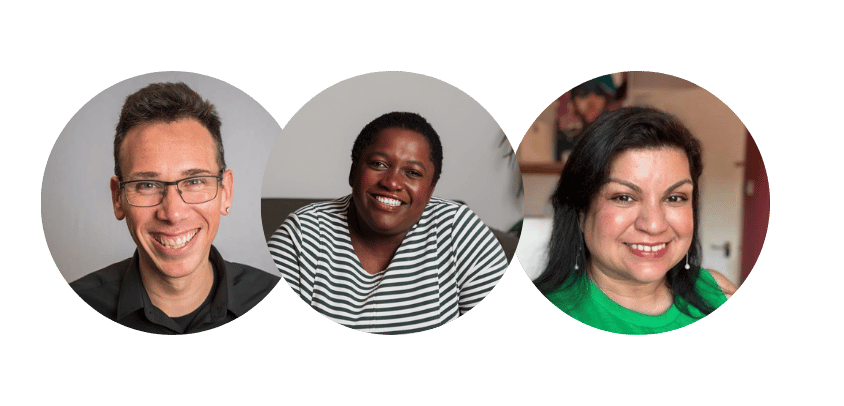
Ep 89: Using spoken communication to build confidence and authority with Tom Coupe
Ep 88: Architecture and construction industry awards from three perspectives
Ep 87: How to bring 'boring' industries to life with Michelle Garrett and Ayo Abbas
Ep 83: Reframing sustainability and climate communications with Rosie Cade and Brigitte Clements
Ways you can support this show
📲 Share about the show on socials
🔗 Follow us on Apple or Spotify
📝 Leave us a review on Apple or Spotify
💬 Tell a friend about the show who you think will benefit.
More podcasts.




Transcript
Ayo Abbas 00:04
Ayo, we have a very special announcement. Ayo, we need
Anthony Walker 00:09
another episode of the built environment construction show. I'm having to scroll too far down my podcast list to find the last episodes. Can you get back on it please and get another one out. Thank you.
Ayo Abbas 00:21
No, your ears weren't deceiving you. I was recently accosted by a lovely, super fan of the show called Anthony Walker, who's from SLG Agency. We were at the Construction Marketing Awards, and, yeah, he was basically heckling me about when I'm gonna get my next episode out. He even used the month anyway. I loved it so much, and it also made me laugh and made me think, yes, I do need to get on and do a recording. So Anthony, you have now featured on the show. And thanks so much for heckling me, because it's good to kind of get me out of my non recording rut. So yeah, thanks a lot. And welcome to the final episode of The Built Environment Marketing Show for 2025 and yes, I'm still around. I'm still alive. It's hosted by me. Ayo Abbas, yeah, and even mate, it's the end of 2025 how amazing is that? How has it been for you? For me, honestly, it's been a year of, I guess, soul searching, finding things out, and trying to kind of figure out how best to operate in the areas that I'm best at and super skilled at, and, yeah, just kind of working with my clients, my listeners, and just getting on with things really. So this episode is a bit of a kind of whistle stop tour of the year. I'm going to do a quick update of the AI in marketing report, which I've still not issued yet, I'm sorry. And then I'm going to do a run through of my episode from the year and look at the figures for the built environment marketing show how it's been this year, and also just some nice clips from my guests. And then finally, I'll do a nod to 2026 what I've got coming up. So let's start here. I first looked at doing an AI in marketing report around kind of June time. Really, I really wanted to understand how marketers are using AI day to day, because I think what we see online is very different to what people are doing in person. So that's really what I wanted to delve into. And yeah, and yeah. I mean, I had 71 responses, which was fantastic. I mean, the main thing for me, I What, the main thing for me was to get really good, I guess practical, day-to-day. This is how we're using it, what we're using it for. And just to kind of share that, and I'm really sorry, but yeah, I have drafted the report quite a few times, and I've had it laid out quite a few times as well, but it's still not quite right, so my gut said not to launch it, and that's why it's not been out. I'm still playing around with it. I've stripped it right back so it is actually almost there. So when it does come out, I will share it on here and I will send it to everyone who's responded. But yeah, it has been a bit late. So yeah, I do apologise for that, but I promise it's worth it anyway. And now let's move on to looking at the numbers for the built environment Marketing Show. So I revisited all the transcripts, and I just wanted to kind of pick out some of the best bits from this podcast from this year. In case you don't know much about The Built Environment Marketing Show, it's an independent podcast mainly produced in my home office, where I do most of my recording and interviews, and then I use an editor called James. But also, I guess, I like to cover a wide range of topics that are, I guess, if I'm being perfectly honest, that are of interest to me, and I hope are of interest to my listeners. So I am a senior level marketeer. I'm about to hit 25 years in the construction industry, which is insane. So I'm gonna be doing a lot about that in January. But also I think for me, it's such a changing segment. I think there is so much more that we can be do marketing wise. And I really just want to showcase some of the best voices, some of the best ideas and some of the best practice that people should be thinking about doing in their marketing. And that's what this show is all about. So let's get on with what I'm gonna kind of do today, which is actually just do a quick run through some of the clips, and yeah, grab a mince pie, have a coffee and let's go in. Shall we? So last week, I did my own end of year review of the show, and kind of did all the number crunching. I am a complete stats and numbers geek, so if you want any kind of information on how to get your digits together, do drop me a line. I've always got a way of figuring it out. But anyway, so I did 11 episodes this year, which is probably half the number that I would normally do. I'm well on the way to kind of hitting that 20,000 downloads mark, which is quite scary. I think I want to, like, 19,900 downloads. So yeah, if you can share this episode far and wide, you might help me, help me, help me to hit that 20k mark, very, very soon. And that is my old all time downloads. But actually, this year, I've had three and a half thousand downloads, which is fantastic. It's actually the highest number of downloads I've ever had. So yeah. I put out half the episodes, but actually I had even more downloads than normal. So that's great. Of course, I've had loads of amazing guests. I've done solo episodes on things that matter to me as well. And yeah, so it's been quite the year. So my top three episodes in first place is the AI and marketing episode with Stuart and Kristian, where we looked at the pros and cons of all things AI in marketing. And then the second episode that was the second most popular was actually the one with Anna O'Riordan, where we talked about funnels. And I guess why funnels don't really work for B2B was such an interesting chat, because I see funnels talked about everywhere. And to be honest, I kind of think they don't really apply to us anyway, so we kind of delved into that. And then actually what came in third place is a really old episode of the show this year. So it was actually from 2021 the interview that I did with Magnus Strom talking about finding his niche has suddenly spiked in terms of popularity. So yeah, that's actually had 129 downloads this month, this year. Sorry, not this month. And yeah, and I'll do it top four, because so that I can include another episode from this year. The next one was actually about spoken communication, which was by Tom Coupe. So yeah, I guess the key learning for me is actually putting out less episodes actually got me more downloads. So less can be more. And I think that's probably a lesson for us all going into 2026 Okay, so let's now go on to some of the episodes and look at some of the highlights. So let's kick off with a number one episode that I had downloaded this year, which is all about AI. So with Stuart and Kristian, like I said, we talked about the pros and the cons of AI, the impact on marketers and junior staff, and what we think it will happen to the industry in the future. So let's first start off with listening to a quote from Kristian
Kristian Downer 06:49
I think they're using tools that are using AI without necessarily realising it as well. So they may be the external tools they're paying for. But for example, if you've got Google Workspace now, it has a summary of the email chain that you're in as a as a standard, until that's an AI generated summary that that's that's there. If you're using Microsoft, you've got copilot and you've got pieces in there, but also you go on Google Maps, that's all AI machine learning. You know, pieces like that. You're using any number of different tools that you use in your day to day. They're all Canva, for example. They're all now adding in AI, or have had elements of particularly machine learning in them for a very long time. It's just now we know what to call it Grammarly being the classic example that is just one massive machine learning algorithm that's learning what's right and what's right and what's wrong, and then providing you suggestions based on based on that. And then the other tool that I love, that I think doesn't get as much stuff as it should, is just NotebookLLM, absolutely love that. So you can upload a document and it'll give you a summary of it, but you can also upload it as a podcast. If you are an audible learner, you can, kind of, it will create a 20 minute podcast based with two AI voices, talking, talking through the idea to kind of help you. I use that again every day. When it comes to if I've got a pitch meeting or something like that, I'll upload the conversations we're having, and it'll give me an overview. So there's hundreds, if not 1000s, of tools out there, I think we've all, we've all got to think, well, let's not just use ChatGPT. Let's build use cases, work out the problems we're solving, and then work out what software and tools we're going to use.
Ayo Abbas 08:35
Okay, and now let's listen to Stuart's views on some of the biggest issues with a widespread use of AI in marketing.
Stuart Wilks 08:43
The biggest
Stuart Wilks 08:44
problem for me, and I think it's going to disappoint you to find that I agree with Kristian I think he's spot on. I think that's the thing, is using it intelligently. The biggest problem is the lack of common sense out there. There's so many people, and I don't want to criticize young people too much, but it does tend to be the younger generation who seem to just put their question in and accept the answer without any kind of question whatsoever. One of the biggest thing I had an application for a job recently, and it said I'm so and so currently studying blah, blah blah, with a strong interest in marketing strategy and project based work, which is all okay. And then it got to I've been impressed by lime Slate's involvement in the RIDW opening reception and the second annual golf mediation round table. And I was like, hold on a minute. There's something a bit odd going on here. And I looked at it again, and I was like, ah, the wording is a bit odd, and it's and we've never been involved in the events that she'd mentioned. I was like, Well, I've never even been to those events, never mind organised them. And she just, I said, I wrote back. I said, Did you use AI at all for this? Yeah, I thought it would make my application sound better, but you didn't bother to check whether we'd actually had any involvement in the event, the events that you've quoted in your thing. And it was just those sorts of things where the kids are just going now, yeah, I believe the computer. I believe it. And. Said, no, just use your common sense. Do use a bit of discretion. And the people out there that are using it without any ability to sort of critically think, and yeah, it's that's the biggest problem
Stuart Wilks 10:11
with it,
Ayo Abbas 10:12
AI, is such a fast changing topic as more and more cash is pumped into it and it's rapidly developing and deployed. So it's one of those things that I'm going to keep touching back on in 2026 and there and beyond. Really, there's no way you can avoid it. So let's go into our next clip. This one is all about sustainability and communications. Climate change is here to stay, and it's getting worse, but actually it has fallen down the priorities of businesses and also governments, which is also quite a worry, but that does not stop us talking about this important issue here. So I brought together two people who I just think are brilliant in what they do, and they're inspiring to me and lots of my listeners. So I brought together Rosie Cade and Brigitte Clements to talk about climate change and communications and sustainability. So we really got into the weeds of how important it is to make people feel something about climate change. And this point from Rosie really struck a chord with me, talking about the fact that it kind of, you've got to make people feel good, or else they're just not going to want to make change. So take a listen.
Rosie Cade 11:18
Yeah, and I really like the facts of, like, you know, kind of bringing different vibes into different spaces. So you'll hear about a really amazing community project, or amazing retrofit festival, for example, and it just sounds so rich and warm and positive, and then you walk into a finance room, and there's this expectation that everything is going to be very dry and very technical and very serious, and it's kind of like, Nah, it's all about vibes, this transition. I know we're humans, and you cannot get somebody excited about something. They'll pretend to be excited about it. They'll pretend to be on board, yeah, unless they're like, genuinely, I often ask this with marketing communication, stuff like, if,
Rosie Cade 12:01
if I read that, would I actually be interested and excited
Rosie Cade 12:04
and delighted or not? And if I know then it's I'm never going to remember it and I'm never going to act on it. So I think we need to be a bit more authentic.
Ayo Abbas 12:15
And yeah, when it does come to that whole thing about painting a picture and being more authentic, that really is part of our job as marketeers. How do we get people excited, and how do we kind of, I guess, get people infused by what we're doing? So yeah, let's listen to Brigitte and what she's got to say about it.
Brigitte Clements 12:32
I did a systems change program that was kind of organized by the UKGBC, and with our colleague Emily Rose. We decided to kind of run with our theme, which was regen to finance, because we're nerdy, and we really get excited by this. So it's, we don't have a finance or economics background. We're just interested, and we've just been plowing through and presenting stuff. And, you know, we have architecture background, so we're quite good at presenting and organizing things. So we've been invited to speak at a couple of finance things, and we're like, oh, caveat is that we are not experts, right? We were very clear about that. And what's happened is that a lot of finance people are not very good at presenting. They're pretty dry, and so we have inadvertently turned into like the punk of these talks and saying, like, look, we don't really know you need to investigate this, but these are all of our links. This is, I mean, we open source all of our knowledge anyway. But, you know, it's we kind of frame this, and people all sudden, you know, at the end, you know, you go for your canopies after, and people kind of bee line for us, because we make finance exciting. But it's true. It's really, I mean, it's, it's, it's amazing, you know, this and this whole thing about vibe, Rosie, you're totally bang on. I mean, I find it very funny, but it's true, you need to be able to engage in a topic and a theme.
Ayo Abbas 13:56
So by creating a vibe, and I guess just making people interested in your topic that's so, so important. So yeah, the whole thing around sustainability and communications was a real, real, real open eye opener for me. I hope it was for you, too. So now let's move on to another episode that did really well, which was my second most popular one. And this was, was with Anna O'Riordan, and we were talking all about the funnel. Now the funnel in kind of consumer marketing is kind of the given of you start up here and then you work your way down. But really, that's not how it really works in B to B. So this was a fascinating conversation to have. Let's listen to what Anna has to say.
Anna O'Riordan 14:33
I don't think it was ever meant to be a gospel. This is what we are. And I think the funnel has sort of become a bit of a Bible in marketing. It's like, you know, this is how you will do it, and this is how you will think about marketing, and this is how it works. And really it's not, it's a guide, it's a visual framework so you don't lose key stages, you don't lose sight of things that are happening with the consumer. But it's not, in my view, something that helps you move drastically forward. Right? And there are a few reasons for that, you know, the first one, and this is a big one, most buying journeys are not linear. They do not follow a neat pattern. Think of your own buying journey. It just doesn't happen. You know, people will jump around. They will pause because something's changed in their needs. They might loop back a stage because, you know, something else has come, or they might just skip stages altogether. So you know, visual representations can be dangerous. They can be really helpful for conveying something, but when someone takes it as verbatim and gospel, and we must follow through these phases, you start to get into sticky territory.
Ayo Abbas 15:41
So, yeah, I love the idea of funnels being messy, and I guess there's no, no kind of straight line when it comes to B2B relationships. We know so many different people in those relationships are key. So let's kind of move on and actually talk about, I guess, confidence. And that was something that my guest, Tom Coupe also spoke about, which was very much about, how do you instill confidence in practices who are brilliant at design, but they often freeze when they can't communicate when it comes to speaking about their work, he really broke down this the importance of being able to speak and communicate in this in this episode. So I hope you enjoy this clip.
Tom Coupe 16:21
By the time you've done you've done all of that training, you're already practicing, you're already in a firm, you're already giving exciting projects to work on. You know, there's a lot there to feel proud of and feel confident about, but actually speaking about your work in an unplanned way, that's the funny thing about face to face communication, slightly, can't really fully plan it. Can't go in with a sheet of paper, and
Ayo Abbas 16:48
I shall be saying to you, doesn't work anymore, and
Tom Coupe 16:54
that's why we default to emails way too much, right? Because it's much more it's a much more managed communication tool, but it's way overused, and face to face communications is way better at building trust and understanding. So your question was about, how do you build confidence? Right? So the whole framework of this training is basically based on the idea that if you allow a smart professional to see the workings a little bit just see the matrix of how you do it, they'll have that confidence. Okay, okay, this is not a magic tool that only that person over there who's brilliant at it and seems to do it in their sleep, and I can't do it. What? What's the magic? If you can see that actually what they're doing is just using a maybe seven, eight basic techniques, if you've understood the techniques, and take them apart a little bit, you say it's, it's, you know, messaging just simply works like this.
Ayo Abbas 18:02
So yeah, spoken communications wasn't a topic I'd thought about before, but it really can open up a real, whole new world of opportunities for people, that's for sure. And next up, I was invited to be a guest on Michelle Garrett PR Explored LinkedIn Live, which I really, really love. It's definitely worth checking out. So I went on to go and talk about, I guess, doing marketing for boring industries. And personally, I find none of our industries boring. I think that's highly exciting, as does Michelle. So yeah, let's hear a clip from that, that conversation.
Michelle Garrett 18:36
I think that is exciting to me, because it does kind of cause you to kind of look under the hood and, you know, find the things that are maybe interesting that sometimes, I think the people working in the companies don't see it because they're down in the weeds. They're, yeah, it's down in their work. So they need somebody to come in and kind of say, like, oh, wow, that's really cool. Did you ever, have you ever talked about that? Have you ever no go? No, they didn't even realize it was cool. Have you showcased that client, or have you told that story, or like, you know, and often, yeah, they just, they didn't even, it didn't even occur to them. So that's why I feel like it's kind of, it can be really fun.
Ayo Abbas 19:18
And finally, a couple of more episodes that I touched on this year. So I did a episode which looked at five years of podcasting and doing this show. So if you're interested in how to podcast and what you should do, and what I've learned podcasting, and the opportunities and doors that I've opened to me, do check that one out. And I also did another special two parter, which was looking at UKREiiF, where I interviewed Nathan Spencer and we had on Jeremy Brim as well. We talked about what you can do before, during and after a major event, such useful ideas and practical solutions on what you can really be doing so that you make the most out of your investment and time there and yeah. And then I've also done look into awards. Awards are always. On my mind. So I've also, I've been an organizer. I was a riba judge this year again. And also I've entered many, many awards for both myself and for my clients. So I gave a lot of tips on what to do all around awards so that you can be more successful. So yeah, if that's something you're thinking of doing in 2026 do check that one out as well. Anyway, that's the end of my roundup on my podcast episode. So let's talk about what I'm going to be doing in 2026 and yes, I will keep putting out episodes, but I'm going to aim for, say, 12 at a minimum. So at least once a month there'll be a mix of solo and interviews, because I really do enjoy doing a mix of the two. And maybe I'm going to try and do a few more in person interviews as well, because I think sometimes having a camera making that kind of bit more face to face stuff is just, I guess, a bit different and bit special. So I might do some of that as well. So that's what I'm planning for on the podcast. If you've got any ideas on guests or formats or topics or feedback, or if you'd like to leave a comment that's also appreciated. So yeah, I love podcasting, I love listening to them, and I hope you still love the show. And yeah, thanks for being patient with me, and I look forward to seeing you in 2026 Thank you. Bye. Thanks so much for listening to The Built Environment Marketing Show. Don't forget to check out the show notes, which will have useful links and resources connected to this episode. You can find that on www.abbasmarketing.com and of course, if you like the show, please do share it with others on social as it helps more people to find us see you soon you you.