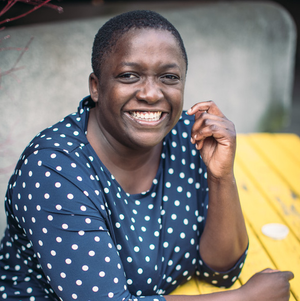
Building visibility through thought leadership in the built environment

Why do some people get seen and others don't? In this solo episode, Ayo talks visibility and thought leadership, and the invisible work sitting underneath both.
Nobody just lands on a stage, a panel or an advisory board. Ayo shares the six months of unseen work behind one senior director's conference appearance, and why that story stopped a room of junior engineers in their tracks. Then she turns to the other side of invisible work: the expertise technical leaders hold that rarely travels beyond a handful of people.
We cover:
- What visibility and thought leadership actually mean
- The real question to ask instead of “why not me”
- A behind-the-scenes story of what it really takes to land a stage moment
- Why untapped technical expertise is a genuine commercial loss
- What to do next, whether you're a marketer or a technical lead
Work with Ayo
Want help with your own marketing and BD strategy in architecture, engineering or construction? That's what I do at Abbas Marketing. Get in touch: ayo@abbasmarketing.com
About the show
The Built Environment Marketing Show is hosted by Ayo Abbas. It is a show that is unashamedly about marketing for architects and engineers, as well as bringing forward voices that we don't always get to hear.
BOOK A CALL TO TALK ABOUT WORKING WITH ME IN 2026
Ways you can support this show
📲 Share about the show on socials
🔗 Follow us on Apple or Spotify
📝 Leave us a review on Apple or Spotify
💬 Tell a friend about the show who you think will benefit.
More podcasts.








Transcript
Ayo Abbas 0:05
Hello and welcome back to the Built Environment Marketing Show. I am your host, Ayo Abbas, and I am a marketing consultant, strategist, and speaker and trainer. If you want to find out more about me and my work, head to www.abasmarketing.com. Today I am going to talk all about visibility and thought leadership. Specifically, I want to talk about why some people get seen and why why some people don't. And yes, there is so much brilliant work out there that actually stays hidden. But before we get going, I just wanted to kind of touch on what I actually think visibility is. Visibility is simply about being known for what you do by the people who need to know it. It doesn't mean being famous and everywhere. It's about being in the right places. It's just about being present and recognisable to the right audience, whether that's a client, a journalist, or a conference organiser, it's all of those things. Thought leadership, on the other hand, is one of the main ways that you actually go and build visibility. It's about sharing your genuine expertise, your opinions publicly, consistently over time, so people start to associate your name with a particular topic or point of view. You build up that recognition. Neither of those things happen by accident, and that's what this episode is all about. It's about the work that sits underneath both of them that almost nobody ever sees or wants to acknowledge. If I had a pound every time I heard the following sentences, I would be a very rich woman. I should be in that magazine article. I should be on that panel. Why are they on that advisory board? I should be on it. Yeah, I've worked in this industry for 25 years, and I've heard these things so many times. And in a way of people saying that these are the things that they should get to, I've heard it from engineers, I've heard it from architects, and honestly, they're asking the wrong question. The real question has to be this: What did the people who are in there actually do to get there? And it's a tough ask because I promise you, nobody just landed there. Nobody. Oh, I guess unless they're literally paying for it, but you know what I mean. Someone was having conversations one or two years out, doing the work to get that future win. Someone was doing the research that quietly built their credibility, publishing in those lofty, boringly dull industry journals, as well as on LinkedIn. Someone was sitting through lots of definitely dull meetings and working groups before that big one landed. This is the unglamorous, gritty work that people need to do to end up landing those bigger wins, those bigger, visible marketing and BD wins, and that, to me, is what people miss. It's all too easy to moan about the luck of others and not see the effort that went into them getting there. It's all too easy to see the end result and think, well, maybe we're on the same level, or I'm even better. But maybe you are, but maybe you're not. But maybe you're not seeing the years of small, unglamorous, little, little steps that got them to be where they are now. So let me give you an example of something that happened when I was working in the house, probably about 15 years ago, I did a talk to a group of junior engineers at the time about a win for a senior director. They'd seen him walking up on stage, speaking at a big environmental conference, and they were wowed. They thought it looked effortless. They were championing him, saying how amazing he was. But what they didn't see was the six month I'd spent chipping away at guessing there. I had identified the opportunity in the first place. I'd developed the pitch. I'd arranged schedules around a diary that never wanted to work with me because obviously he was very very busy. I'd written the deck. I'd written the script. I'd done rehearsals with him. I'd drafted his bio. I wrote his publicity materials. I put it on social media, and then being there on the day, making sure it all ran smoothly, and he was happy, and he had everything, and speaking to organisers. We've all been there if you're a marketeer. So what I did was I did a timeline for them.
Ayo Abbas 4:39
I talked through every single little step that I had to take, and I watched their jaws hit the floor, mainly because they had no idea about the hidden work involved under that bigger win. They really had no idea. To them, he just arrived on that stage. And that was it. And I think this is a big point for marketers. It's something that we can easily forget until we start mapping out all of the little steps, those little incremental steps. Until we start showing people what the journey looked like, rather than just a final destination, people are going to keep whinging at us, but they're also going to keep devaluing all the invisible work that we do, that is vitally important. And honestly, if we haven't done the work, we can't really complain. And if we haven't shown them that we've done the work and how, we also can't complain. Are you a practice leader who isn't getting the industry profile that you deserve? I often hear from practices who do brilliant work but aren't actually getting the visibility they need to get business through the door. Practices that influence the sector aren't necessarily the best at design. They're often better at positioning their expertise and getting it seen and valued by those with budgets. I'm Ayo Abbas, and for 24 years, I've helped leading built environment firms build the recognition and authority that their expertise deserves. Drop me a line at ayo@abasmarketing.com, which is a y o at a b b a smarketing.com, to set up a call where we can talk about how I can help you get a strategy and plan in place to get you to where you deserve to be. It's not just the marketing graph that stays hidden. There's another kind of invisible work going on too, and it sits with the technical people and design people themselves. They are specialists in their areas. They are specialists on working on complex projects, working with communities, knowing loads and loads of things that the industry doesn't. They know so much that actually people would love to hear about. They'd even pay for it. How to retrofit a specific building type? The best way to kind of navigate Building Safety Act compliance for high-rise buildings. We know that's hard. I know people with this knowledge sitting in their heads, and it comes out beautifully in client meetings, on calls, or while making coffee with their colleagues. But in truth, it never, ever reaches the people who it really should. It might only reach about 11 people in its entirety, and that's where the issue is. That's the same pattern as the story I just told you, brilliant work happening quietly, seen by almost nobody. The difference is this time it's not effort that's invisible; it's expertise, and that is a genuine loss-not just for the person holding it, but but for the firm around them, because that knowledge has real commercial value. It's for leadership sitting there all untapped. Firms who find a way to get that thinking out into the world properly, consistently, tend to build a reputation that's very hard for competitors to catch up, and also for AI nowadays to replicate. So here's what I'd love you to sit with after this episode, whichever side of the kind of marketing sphere you're on, if you're a marketeer, what's one thing you're doing right now that's building towards a future win nobody's asked you about yet? Because that's the work that actually counts, even when nobody's watching. And yes, make sure that you do get your recognition. So things like the construction marketing awards, empty yourself in them, get the recognition from third parties. It will really, really help you. And if you're the engineer or the architect, think about the last brilliant thing you said in a client meeting or over coffee with a colleague. Who else needed to hear that, and what's stopping it from reaching them? Can that be a LinkedIn post? Can you share that somewhere else? Can that go into a newsletter? That's all amazing content and ideas. You're just not seeing it. The people and firms who do this well don't wait for the perfect moment. They start with whatever's sitting in their heads or on their desks right now.
Ayo Abbas 8:56
They use that as to inspire their content to get visible and to get their thoughts out into the world so that they can leave the marketplace. Anyway, that's it for me this week. If this idea of visibility and thought leadership landed with you, please do share this episode with others or someone in your team, a marketer or technical lead who could do with hearing it. I'm Ayo Abbas, and this is the Built Environment Marketer Joe. Thank you so much for listening. Thanks so much for listening to the Built Environment Marketing Show. Don't forget to check out the show notes, which will have useful links and resources connected to this episode. You can find that on AbbasMarketing.com. And of course, if you like the show, please do share it with others on social, as it helps more people to find us. See you soon.